When the hard part is choosing what works together
Suppose you want to build the best football team in the world. You could start by selecting the highest-rated players. Now your squad has five strikers, no goalkeeper and two players who refuse to pass to each other. So, you try again: pick the best player for each position. Better, but modern football is not eleven isolated jobs. Players cover and create space for each other, sometimes empower and sometimes make each other worse. The quality of the team is not the sum of the individual ratings. It is in the interactions.
A good team also must have a fixed number of eleven players. The point is to choose a set of players whose roles, strengths and weaknesses best fit together. Adding another brilliant player (even if legal) does not automatically improve the team. It may crowd the same space, duplicate an existing role, or create a tactical weakness somewhere else.
That is the core of many machine learning problems. We are not simply asking which individual data components look useful on their own. We are asking which small set of components explains the measurement best together, without overfitting noise. Choosing one component changes the value of choosing another. Some components are redundant, some compete to explain the same part of an observation. Some only become meaningful if they appear together.
When a measurement can be explained by thousands of possible components, variables, peaks, features, or causes, the most useful answer is rarely the one that uses as many of them as possible. A smaller explanation is often more robust. It is easier to interpret, easier to validate and less likely to mistake random noise for meaningful structure. The practical challenge is to find a small set that explains the observation well, without filling the model with accidental details that only happened to appear in this dataset. Every extra component should have to earn its place in the explanation
About twenty years ago, the breakthrough came from replacing that difficult “how many components did you use?” question with an easier one: “how much total component weight did you use?” That made the mathematics much easier to handle, but it also changed the meaning of the answer. Many tiny contributions can now look mathematically as acceptable as one clear component, even though the end-user often wants the latter: a definite molecule, structure, feature or cause that can be acted on automatically, without human in the loop interpretation.
In football terms, the approximation is absurd in exactly the right way. You ask for one central defender with a €10 million budget. It gives you three cheaper defenders whose contracts add up to €10 million. The spreadsheet is happy; the coach is not. You now have more players than the formation allows, blurred responsibility and no decision on a single player who actually gets the job done.
These approximate techniques (LASSO and compressed sensing) spread through signal processing, machine learning, computer vision, bioinformatics, medical imaging and many other disciplines. They were a great step change, and over time, these methods became so successful that the “total component weight” workaround became the standard workflow.
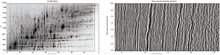
Fast forward to June 2026, when a conversation between TNO colleagues from different departments turned this abstract issue into a concrete quantum-application search. One colleague was working with liquid chromatography-mass spectrometry, a laboratory technique used to identify molecular signatures in complex measurements. The other came from geophysical imaging, where the challenge is to infer underground structures from indirect and noisy signals.
Then they compared the data. The signals looked surprisingly similar. Peaks on top of peaks. Weak structures hidden underneath stronger ones. Useful information buried in noise. Both problems were versions of the same problem we discuss here. The mathematics did not care whether the measurement came from LC-MS, seismic imaging or another sparse inference problem.
Both fields had spent years becoming extremely good at solving the approximate version. Because the truly difficult problem was usually avoided, hardly anyone checked how much value had been left on the table.
Now the question is whether hybrid optimisation lets us return, selectively and economically, to the problem we originally wanted to solve. Early LC-MS results suggest that this can matter in practice. Weak molecular signatures that were difficult to isolate with conventional workflows are being picked up by an algorithm that tackles the original hard selection problem more directly. That is the point of the story: not that every sparse problem needs quantum hardware, but that some long-accepted approximations may deserve to be reopened when enough value is at stake.