What if we could make 80% of discarded satellite data useful again?
Satellite radar can detect remarkably small movements of the Earth’s surface. That makes it valuable for monitoring ground subsidence, infrastructure, landslides risks and other changes that develop over large areas. But the satellite does not directly produce a clean deformation map. Its measurements contain phase values wrapped within a repeating cycle, and reconstructing the underlying signal requires a step called phase unwrapping.
On dense noiseless data and smooth landscape, and moderate deformations, well-established inexpensive methods often work efficiently. However, when monitoring areas such as forests or grasslands the deformation information is mixed with plant movement (e.g. due to wind, growth, or lawn mowing), making this problem significantly harder. Typically, that data gets discarded, and monitoring these areas is an outstanding challenge!
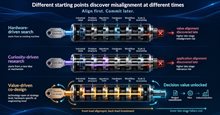
We have chosen this problem in collaboration with our colleagues at the Geological Survey of the Netherlands, to be the first QALF demonstrator – a project developed explicitly around a new principle: start with value, not with the quantum computer.
Large optimisation problems such as this cannot simply be dropped onto a quantum processing unit. One needs to reformulate the problem, find what the central (CPU) and the quantum processing unit (QPU) can do best, and have them work in tandem. The QPU features variables and tunable interactions between them baked into a so-called hardware graph. The quantum applications engineer, needs to first convert the original problem into an optimization formulation that looks like an interacting system of particles. The CPU needs to break down the problem into manageable pieces, and move them to the QPU. That problem typically has a different topology, and hence needs to be embedded onto the QPU. Tests on real-world data initially produced reliable embeddings for roughly 900 variables – up from around 200 variables we would typically see. For a problem featuring 600 million pixels, that is too small of a throughput.
The team therefore stopped treating the quantum processor as a generic black box where the CPU has to adjust to the QPU. Instead, we had not the CPU, but the problem definition itself adjust to the quantum hardware structure, a process we ended up referring to as “releasing the Kraken” (the Norse many-armed mythical sea monster), or krakenisation.
The change was dramatic. Earlier in development, the quantum-assisted workflow was approximately ten times slower than its classical counterpart. After krakenisation and low-level code improvements of the hardware vendor software development kit, the reported end-to-end benchmark reached up to 23× the speed up relative to a similar approach which was not using a QPU. These results are exciting, but further rigorous benchmarking remains essential. What we can say with some confidence, is that we have a solution that can stably work with incoherent data from green areas, which now is kept in the datasets, as Kraken’s long multiple arms (exactly what the QPU excels at) are able to keep the optimization and inversion for the Earth deformation much more stable than previously possible, while simultaneously not significantly blowing up the compute time.
The work is already attracting attention. The paper linked to the project at the annual Applied Quantum Methods for Computational Sciences and Engineering conference received a perfect score from the reviewers and was seen as the example of how quantum computing should be used by the hardware vendor.
Moreover, the now accessible industrial optimization scale created its own research questions. The recently upgraded compute contract which gave QAL users 30x more runtime, is already pushed to its limits. With this scale and this way of working the believed to be inexhaustible monthly allocated compute time for the whole team, can be used up by a single user in less than 2 days.
That may be the demonstrator’s most important result. QAL did not merely build an interesting phase-unwrapping prototype. It established a new way to run value-first quantum projects: choose a difficult and valuable problem, retain a strong classical workflow, design specifically for the available hardware, benchmark the complete journey and extract a capability that subsequent projects can reuse.
The Kraken began with satellite pixels. Its reach is already extending much further.
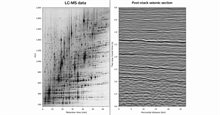
*) LC-MS
Liquid Chromatography – Mass Spectrometry (LC-MS) is one of the most widely used analytical techniques across chemistry, biology, and industrial applications. It combines two powerful principles: chromatographic separation of compounds in time (LC), and mass-based detection of molecular fragments (MS). Together, this enables highly sensitive identification and quantification of complex mixtures, making LC-MS indispensable in fields such as proteomics, metabolomics, environmental monitoring, and pharmaceutical analysis.