Tracking methane from space: can quantum-inspired methods help?
Methane is a powerful greenhouse gas, with a global warming impact around 30 times greater than CO₂ over 100 years, and it contributes to roughly 30% of current global temperature rise. While over 60% of methane emissions are human-made, accurately monitoring them remains a major challenge due to fragmented, incomplete, and uncertain data sources.
From detection to analysis: today’s workflow
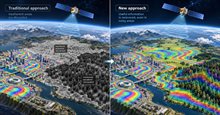
Today’s earth observation workflows combine frequent, low-resolution Sentinel-5P imagery to identify potential methane plumes with higher-resolution Sentinel-2 data for detailed analysis. Deep learning models, such as U-Nets, are then used to segment plumes and estimate leak locations and emission rates. Although effective, these approaches are computationally intensive and struggle to scale across the complexity and uncertainty of global datasets.
From broad exploration to focused approach
The use case ‘quantum computing for earth observation: monitoring methane emissions’, explored whether quantum and quantum-inspired methods could enhance this pipeline. After evaluating several possibilities, including inverse modelling and synthetic data generation, the focus shifted to a controlled classification task using the real-world MethaneS2CM Sentinel-2 benchmark. A shared convolutional neural network (CNN) was used to extract features from multiple observations of the same location, followed by a comparison of classical and quantum-inspired approaches for combining temporal information.
A first step toward smarter detection
The results show that quantum-inspired methods can deliver modest improvements over classical baselines when integrating multiple observations over time. While no computational quantum advantage was demonstrated, the findings highlight a promising direction: improved temporal fusion strategies that could enhance methane detection workflows and merit further investigation.